Flood Resilience and Green Infrastructure: Lessons from Valencia
Examples from Valencia show how flood protection, green infrastructure and community engagement can inform local climate resilience planning—and what municipalities need to consider when adapting these approaches.
A stormwater storage tank, public spaces designed to absorb rainfall and a park that temporarily holds floodwater offer different ways to manage heavy rain. For Kumanovo, their relevance lies in understanding how they work and what would be needed to adapt them to local conditions.
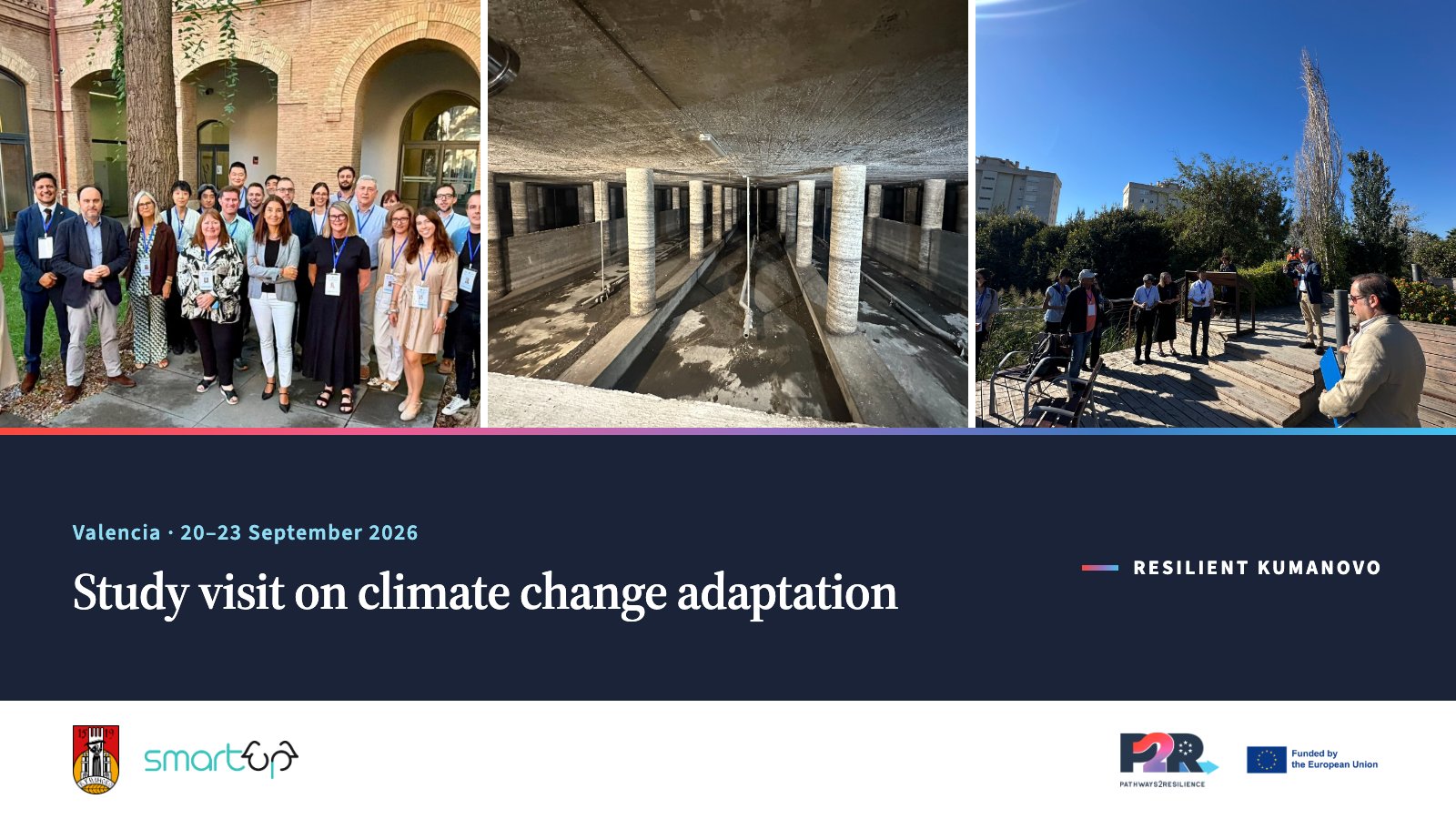
These questions informed the exchange during the IURC study visit to the Region of Valencia, Spain, from 20–23 September 2026, attended by a joint team from the Municipality of Kumanovo and SmartUp – Social Innovation Lab.
Organised within the International Urban and Regional Cooperation (IURC) programme’s Climate Adaptation Community of Practice, the visit brought together representatives from Kawasaki (Japan), Christchurch (New Zealand), Sofia (Bulgaria), Pimpri-Chinchwad (India) and Hamburg (Germany), alongside hosts from Valencia and invited participants from Kumanovo.
Connecting knowledge with practical action
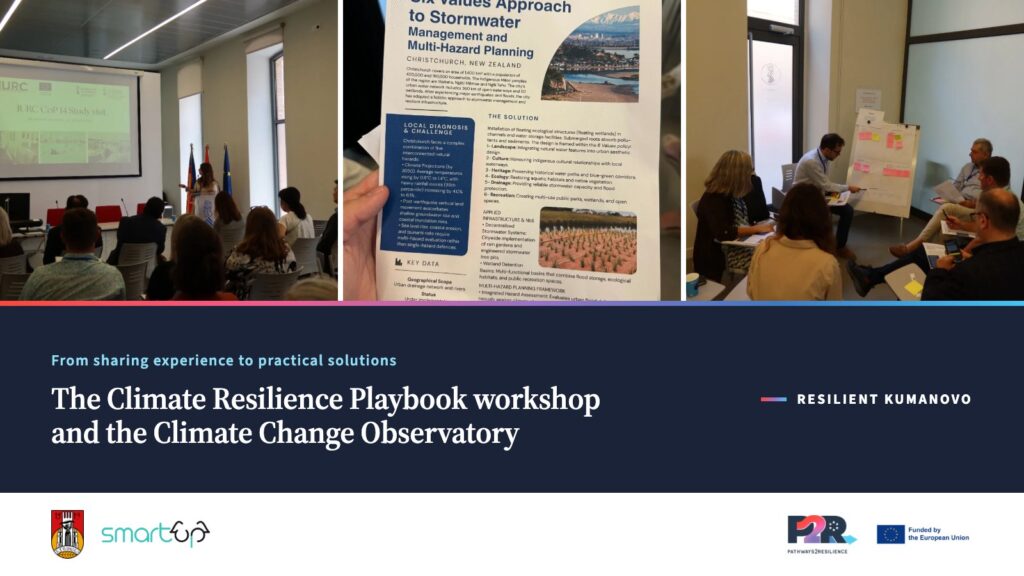
The programme combined technical discussions, collaborative workshops and site visits. The “Climate Resilience Playbook” workshop brought participants together to compare adaptation challenges and consider how solutions developed in one city could be adapted to another.
A visit to Valencia’s Climate Change Observatory highlighted the connection between climate science, public policy and citizen engagement. Discussions covered climate information, stakeholder participation and the city’s network of Climate Spaces, exploring how local institutions can support preparedness and involve residents in adaptation.
A key lesson was that adaptation measures depend on cooperation across institutions, information that people can understand and use, and participation by the communities they are intended to serve. These considerations need to be part of planning from the outset.
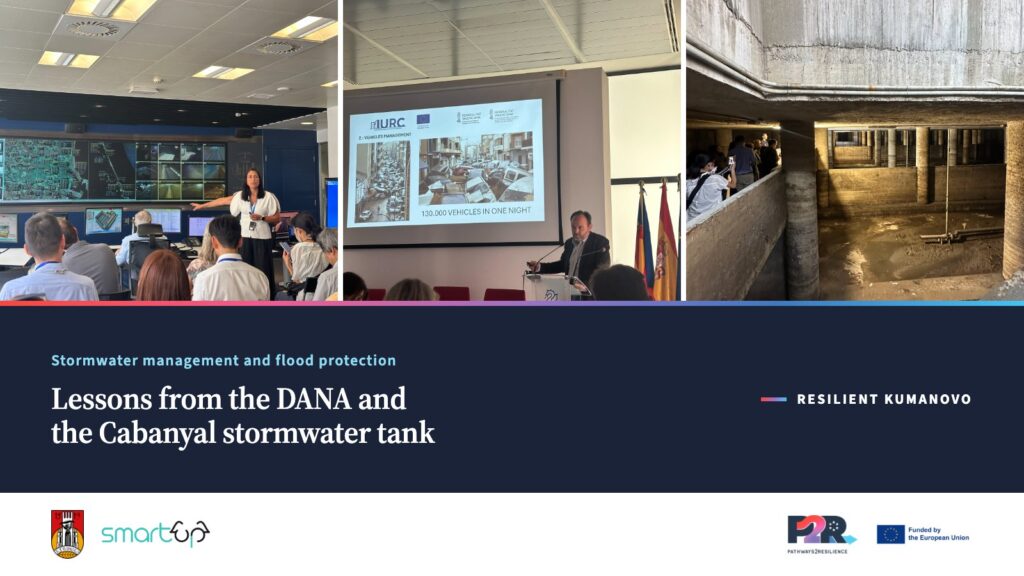
Combining flood protection with better public spaces
Flood resilience and water management were central themes of the visit. Technical sessions examined lessons from the DANA floods and the subsequent recovery process, including how recovery efforts can contribute to long-term resilience.
Visits to Cabanyal’s stormwater storage tank and urban sponge measures illustrated how engineered infrastructure and green solutions can complement each other in managing heavy rainfall. A visit to Albufera Natural Park extended the discussion to water management and the role of natural ecosystems.
At La Marjal in Alicante, participants explored an urban floodable park that combines public green space with stormwater management. It demonstrated how a park can serve everyday recreational needs while temporarily holding water during heavy rainfall.
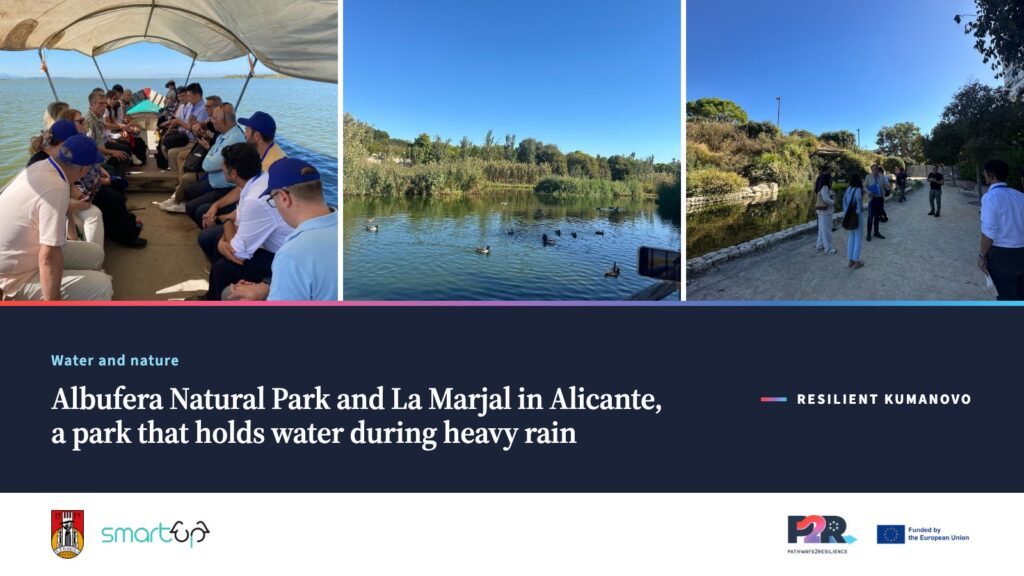
Together, these examples offered a useful perspective for local planning: considering flood protection alongside the design of public spaces and the management of natural areas can create opportunities for measures that serve several community needs.
Bringing the learning into Kumanovo’s resilience planning
With floods and stormwater management among Kumanovo’s priorities under Pathways2Resilience, the exchange provided relevant examples for assessing potential adaptation measures.
At SmartUp, we support municipalities in connecting climate risk assessments and strategic planning with feasible measures and investment priorities. The experience from Valencia offers concrete approaches to examine together with the Kumanovo team.
Their local applicability will depend on existing infrastructure, available space, institutional responsibilities, maintenance requirements and financing options. Assessing these factors will help determine which approaches merit further development and how they could work together to protect residents and improve public spaces.
The insights gained will inform Kumanovo’s ongoing resilience planning, while the connections established offer opportunities for continued cooperation with cities facing similar challenges.
About the project and delegation
Participation in the visit formed part of “Resilient Kumanovo: Building Kumanovo’s Climate Readiness”, coordinated by the Municipality of Kumanovo in partnership with SmartUp – Social Innovation Lab, under the Pathways2Resilience programme. The project supports the development of Kumanovo’s climate resilience strategy, action plan and investment plan.
The joint delegation included Goran Mitevski, Nikola Boshkovski and Martina Krstevska from the Municipality of Kumanovo, and Nikolcho Goshev from SmartUp – Social Innovation Lab.
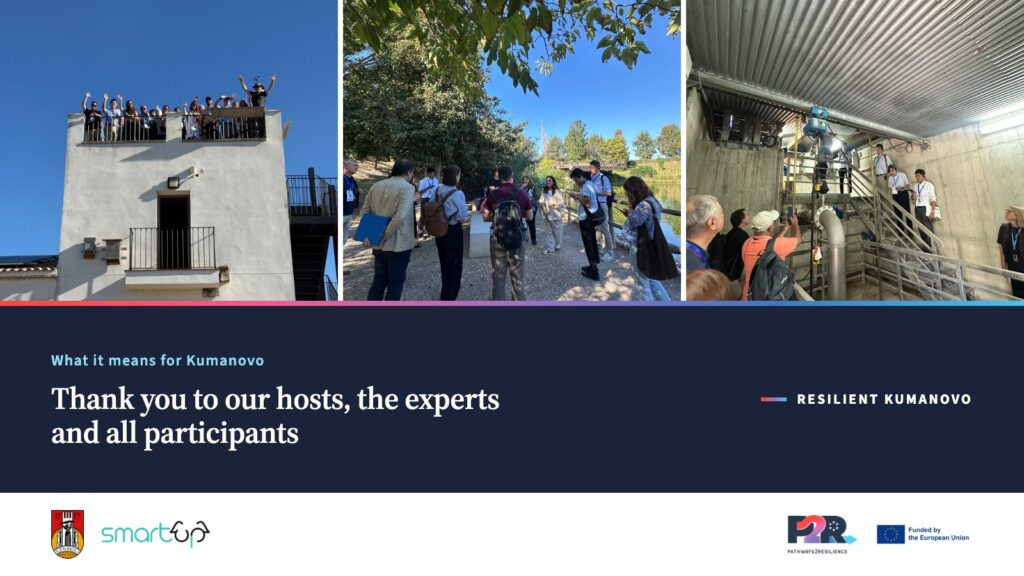
We thank the IURC team and the Generalitat Valenciana for welcoming the Kumanovo and SmartUp delegation, and the hosts, experts and fellow participants for sharing their knowledge and experience.
Read more about the study visit on the IURC website.